Safari Car Rental Uganda
11 listings found
Search
Make
Model
Price (UGX)
Year
Mileage
Engine CC
Drive Type
Transmission
Fuel Type
Specifications
This car is available for travel beyond Kampala and Entebbe — upcountry routes and long-distance trips.
Customers can hire this car without a driver — they drive themselves.
This car comes with a driver, if needed, included in the hire rate.
Available for special hire — negotiated point-to-point trips with the driver.
Available for weekly or monthly hire — suited to expats, residents, and corporate contracts.
Available for wedding ceremonies, introductions (kwanjula), and other functions.
Available for corporate hire — executive transfers, staff transport, and business events.


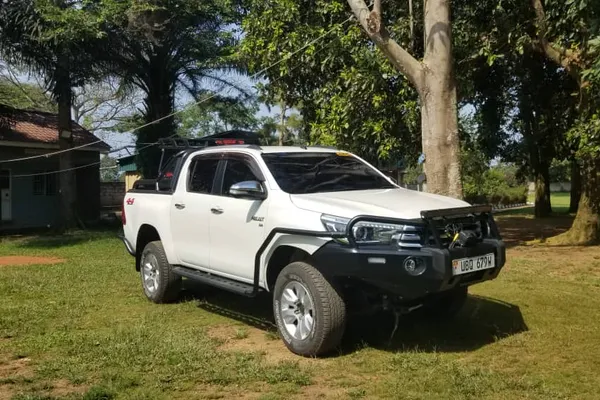


Safari Car Rental Uganda — 4WD Vehicles for Gorillas, Game Drives & National Parks
Car.UG lists safari-ready rental vehicles from trusted Ugandan providers — pop-top Land Cruisers, safari vans, rooftop-tent campers, and driver-guided 4WDs built for the routes to Bwindi, Murchison Falls, Queen Elizabeth, Kidepo, and every park in between. Compare self-drive and driver-guide options side by side and book the right vehicle for your itinerary.
Uganda packs ten national parks, mountain gorillas, chimpanzees, tree-climbing lions, and the source of the Nile into a country you can cross in a day's drive. The vehicle you choose shapes the whole trip — this guide covers what to rent, for which parks, in which season, and what it should cost.
Safari Vehicles: What to Rent for a Ugandan Safari
Pop-Top Land Cruiser (the classic safari truck)
An extended Land Cruiser with a roof that lifts for 360° standing game viewing, usually seating 4–7 with window seats for everyone. The gold standard for game drives — high vantage, serious capability on park tracks, and charging ports plus a fridge box on better-equipped units. Typically hired with a driver-guide.
Pop-Top Safari Van (budget game viewer)
A Hiace-based van with a pop-up roof. Cheaper than a Cruiser and fine for the main tracks of Queen Elizabeth, Lake Mburo, and Murchison in dry conditions. Less suited to Bwindi's steep approaches and wet-season mud — match it to your route honestly.
Land Cruiser Prado / TX (the self-drive favourite)
The default for independent safari travellers: comfortable on the long tarmac legs, capable on park murram, and compact enough to feel manageable. No pop-top, but windows and sunroofs work well for most sightings.
Rooftop Tent Campers
A Prado or Hardtop fitted with a fold-out rooftop tent, camping kit (bedding, chairs, gas cooker, fridge), and long-range fuel capacity. Uganda's parks have excellent budget campsites, and a camper turns the vehicle into accommodation — the cheapest way to do a long multi-park loop.
For a deeper comparison of the underlying vehicles and 4WD capability, see our 4x4 car hire in Uganda guide. This page focuses on the safari itself.
Self-Drive Safari vs. Driver-Guide
Self-drive suits confident drivers who want independence and a lower budget. Uganda is one of East Africa's friendliest self-drive safari countries: parks allow private vehicles, roads between parks are largely decent tarmac, and campsites and budget lodges are plentiful. You'll handle navigation, park gates, and spotting wildlife yourself.
Driver-guide adds roughly $25–50/day plus the driver's meals and accommodation (most lodges offer discounted guide rooms). What you're really buying:
- Spotting skill — guides see the leopard in the fig tree you'd have driven past, and they share sighting locations with other guides by radio and WhatsApp
- Park knowledge — which track had lions this morning, when to be at the Kazinga Channel, how early to leave for the gorilla briefing
- Zero logistics stress — gates, rangers, fuel, punctures, and police checks all become someone else's job
- The drive itself — Kampala to Bwindi is 8–10 hours; arriving rested before a gorilla trek is worth real money
First safari, tight schedule, or a gorilla permit you can't afford to miss? Take the driver-guide. Experienced overlander on an open timeline? Self-drive Uganda is a joy.
Park-by-Park: Vehicle and Route Notes
Bwindi Impenetrable NP (mountain gorillas) — ~460–530 km from Kampala depending on sector (Buhoma, Ruhija, Rushaga, Nkuringo). The final 1–2 hours are steep, rough murram — this is genuine 4WD country, especially in rain. Confirm which trailhead sector your permit is for; they're hours apart.
Queen Elizabeth NP (tree-climbing lions, Kazinga Channel) — ~400 km via Mbarara or Fort Portal. Main game tracks are manageable; the Ishasha sector (lions in fig trees) is rougher and pairs naturally with onward travel to Bwindi.
Murchison Falls NP (the Nile, big game) — ~300 km north via Masindi. Game tracks north of the river suit any decent 4WD; factor the ferry crossing times into your day.
Kidepo Valley NP (remote wilderness) — ~570 km northeast, Uganda's wildest park and its roughest approach. Hardtop or well-equipped Prado territory, long fuel legs, and worth every kilometre.
Kibale NP (chimpanzees) — ~320 km via Fort Portal on mostly good tarmac; an easy add between Murchison and Queen Elizabeth.
Lake Mburo NP (closest park to Kampala) — ~240 km on the Mbarara road. The gentlest introduction: zebras, impalas, boat trips, and tracks most SUVs handle in dry season.
The classic loop: Kampala → Murchison → Kibale → Queen Elizabeth → Ishasha → Bwindi → Lake Mburo → Kampala covers the highlights in 9–14 days and is the route most rental providers know by heart.
When to Go (and How Season Affects Your Rental)
- High/dry seasons — June–September and December–February: best game viewing and road conditions, but vehicles book out weeks or months ahead and prices peak. Reserve early, especially pop-top Cruisers around gorilla permit dates.
- Wet seasons — March–May and September–November: lush scenery, fewer visitors, lower rates, and discounted lodge prices — but park tracks get genuinely difficult and Bwindi treks get muddier. If you travel wet season, the vehicle choice stops being optional: proper 4WD, good tyres, experienced driver.
Safari Rental Prices in Uganda
| Vehicle | Self-Drive (USD/day) | With Driver-Guide (USD/day) |
|---|---|---|
| Prado TX | $80 – $130 | $110 – $170 |
| Pop-top safari van | — (usually with driver) | $90 – $140 |
| Pop-top Land Cruiser | — (usually with driver) | $150 – $250 |
| Rooftop tent camper | $100 – $160 | $140 – $200 |
Budget separately for: fuel (a safari loop of 1,500–2,500 km is a major line item), park entry fees per person and per vehicle per 24 hours, gorilla/chimp permits (booked through Uganda Wildlife Authority or your operator — gorilla permits sell out months ahead in high season), and the driver-guide's meals/accommodation if applicable. Ugandan-registered rental vehicles pay lower park vehicle fees than foreign-registered ones — a built-in advantage of renting locally rather than driving in from Kenya.
What Should Be Included — Checklist Before You Book
- Comprehensive insurance (confirm the excess) and unlimited mileage for long loops
- Full-size spare (two for Kidepo routes), jack, tow rope, fire extinguisher, reflectors
- Functional AC and, for pop-tops, a roof that actually opens — test it at pickup
- For campers: complete kit list in writing (tent, bedding, cooker, gas, fridge, chairs, water container)
- 24/7 breakdown contact and the provider's plan for upcountry rescue or replacement
- Written permission and COMESA insurance if you'll cross into Rwanda or Kenya
- Airport pickup/drop-off terms — most providers deliver to Entebbe free or for a small fee (see car hire Entebbe)
Frequently Asked Questions
How much does it cost to rent a safari car in Uganda?
Self-drive safari 4WDs run roughly $80–160 per day depending on the vehicle; driver-guided pop-top Land Cruisers run $150–250 per day. Fuel, park fees, and permits are additional. Weekly rates are discounted.
Can I do a self-drive safari in Uganda?
Yes — Uganda is one of the best self-drive safari countries in Africa. Parks admit private vehicles, the main routes are navigable, and rooftop-tent campers make independent multi-park loops affordable. A genuine 4WD is essential for Bwindi and strongly advised everywhere in wet season.
Do I need a pop-top vehicle for game drives?
It's the best game-viewing experience — standing height, shade, and unobstructed photography — but not mandatory. Many self-drivers use a regular Prado happily. For dedicated wildlife photography, the pop-top earns its premium.
What car do I need for gorilla trekking in Bwindi?
A proper 4WD with good clearance — the final approach roads to all Bwindi sectors are steep, rough murram that turns slick in rain. Confirm your trekking sector (Buhoma, Ruhija, Rushaga, or Nkuringo) before planning the drive; they have different approach routes.
Is it better to hire a driver-guide for a safari?
For first-time visitors and fixed-date gorilla permits, usually yes — guides add wildlife-spotting skill, park knowledge, and remove all driving fatigue from long legs like Kampala–Bwindi. Experienced self-drivers on flexible schedules do fine independently.
How many days do I need for a Uganda safari?
A single park (e.g. Murchison or Queen Elizabeth) works in 3–4 days. The classic full loop including gorillas comfortably fills 9–14 days. Lake Mburo makes a great 2-day taster from Kampala.
When is the best time for a safari in Uganda?
June–September and December–February offer the driest roads and best game viewing. Wet seasons are cheaper and greener but demand serious 4WD capability and flexible plans.
Can I take the rental into Rwanda to combine gorilla destinations?
Many providers allow it with prior written authorisation and COMESA insurance. Arrange it at booking — and note Rwanda drives on the right.
Browse safari vehicles above and compare providers. Want the full technical rundown on 4WD options? See 4x4 car hire in Uganda. Landing at the airport? Arrange pickup via car hire Entebbe.